Showing posts with label ownership issues. Show all posts

Tuesday, August 21, 2012

Potty Training Puppy Apartment: An effective solution for indoor potty training

"Potty training"...the two words that make many dog owners cringe. It seems like some dogs take to potty training like a fish to water, while others require a long and difficult period before the concept makes sense. Even when a puppy is fully potty trained, owners still must deal with the early-morning and late-night potty breaks, and occassional accidents on the kitchen floor. Wouldn't it be convenient just to have an indoor dog bathroom for your dog that he could use whenever the need arises? Believe it or not, you CAN: it's called the Potty Training Puppy Apartment!


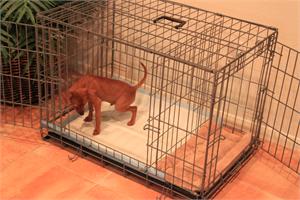
The Puppy Apartment is a unique new potty training device that combines the best parts of the many different training methods on the market. Puppy training pads seems to be the most popular product for indoor potty training, but unfortunately many dogs "overshoot" or miss the pad entirely (leading to sticky, not to mention stinky, floors.) Indoor grass patches have become popular, but the same problem exists with overshooting and the obvious inconvenience of having a box of grass/faux grass in your home. These solutions aren't viable, either, if your dog or puppy is confined to a crate during the day. Older dogs will be expected to "hold it" until you get home. However, puppies have tiny bladders and therefore must take frequent potty breaks;  if your puppy is confined to a crate for more than a few hours, accidents can and WILL happen. The Puppy Apartment combines a crate and a bathroom so your dog has access to a potty area and a sleeping area, yet in separate compartments to keep your puppy clean and comfy.

The best part about the Puppy Apartment is that it comes with a training DVD to teach you exactly how to use the device with success. The Puppy Apartment training program teaches the dog to use the bathroom indoors in 3 stages, so the puppy gradually learns to use (and prefer) pottying indoors in the Puppy Apartment. Eventually, your dog will be able to have free reign of the house and still will go back to the Puppy Apartment to potty (like his own personal bathroom!) The training program was developed over a period of five years of research, and is even patent pending. Customer service is also available 7 days a week to help with any questions or concerns that might come up with the Potty Training Puppy Apartment, so once you start you always have help available if you need it.

The Puppy Apartment is a combination bed/bathroom
Many owners like to crate train their dog, but this can come with the issues discussed above (older dogs being forced to "hold it", and puppies requiring frequent potty breaks.) The nice thing about the Puppy Apartment is that it can be used to crate train and potty train simultaneously. Since the Puppy Apartment is divided into two separate sections, it is a combination bathroom and bedroom (sort of like a studio apartment for dogs.) Your dog will always have a clean and dry place to rest in the crate, and a bathroom available when he needs it. Dogs that stay crated during the day will be sure to enjoy this! Dogs who will have free reign of the house (after potty training) will also appreciate having an indoor bathroom to use. Dogs are biologically wired to seek a den to dwell in (like their wolf relatives), so having a crate available to rest in is a great idea even for dogs who are not confined to a crate for long periods of time. The Crate Training Puppy Apartment fulfills the need for a den dwelling and a bathroom in one unique product.

If you're looking for an effective way to potty train your puppy or dog, or a nice alternative to taking the dog out at 6 AM every day for a potty break, check out the Potty Training Puppy Apartment.

Tuesday, July 24, 2012

BANFIELD® PET HOSPITAL IS STAGING AN INFURVENTION

In Partnership with Animal Planet’s Victoria Stilwell, Banfield is Looking for Cats and their Owners in Need of Professional Help

Animal Planet's Victoria Stilwell
Photo Credit: petside.com
Portland, OR—July 18, 2012—Calling all cat owners: is a trip to the veterinarian a constant cat-fight? Do you sometimes find yourself avoiding routine visits to dodge a cat-tastrophe? Is “stressful” a term you use to describe the process of getting your cat out of the house and into the veterinarian’s office? If so, Banfield Pet Hospital and Animal Planet’s Victoria Stilwell want to hear from you.

Banfield Pet Hospital, the world’s largest veterinary practice, and Victoria Stilwell are staging an “inFURvention” to help combat pet owners’ difficulties of getting their cat into a carrier while raising awareness of the importance of regular veterinary visits for cats. Banfield and Stilwell are asking cat owners nationwide to upload videos of their real-life struggles and attempts to get their cat into a carrier for a chance to win a year’s worth of free preventive veterinary care and a special at-home visit and training consultation from Animal Planet’s famed pet trainer, Victoria Stilwell.

Of the 86 million felines living as pets in the U.S., an astonishing one-third of pet owners will skip a trip to the veterinarian to avoid the hassle* – yet missing a veterinarian visit could actually cause more harm to the pet. Cats rarely exhibit signs of sickness or disease even when a problem exists; therefore, routine veterinarian visits are essential to protecting pets from life-threatening illnesses.

“There is no doubt that cats can be finicky when it comes to travel; however, there are easy tips and tricks pet owners can use to ensure a smooth road ahead,” said Stilwell. “Pet owners don’t have to be a professional in order to train their cats to get into the carrier. All it takes is some practice and simple changes in behavior and cat-fights will soon be a thing of the past!”

It’s time for an “inFURvention!”

Beginning Wednesday, July 18 through Friday August, 17, pet owners are invited to upload their “real” cat videos to http://www.infurvention.com/, with the tag “#inFURvention” to be considered in need of an “inFURvention” from Stilwell. One pet owner and “inFURvention” video will be chosen to win a year’s worth of free preventive veterinary care from Banfield and a special at-home visit with Victoria Stilwell who will give professional insight into the best tips and tricks to getting your cat out of the house and into the veterinarian’s office.

“One of the biggest barriers to cats receiving veterinary care is actually getting them to the hospital,” said Dr. Jeffrey Klausner, chief medical officer for Banfield Pet Hospital. “Unfortunately, cats typically don’t show signs of illness until it is too late; therefore it is important for cats to receive twice-yearly veterinary visits in order to prevent, as well as diagnose and treat illnesses before it’s too late. Through ‘inFURvention,’ we hope to educate pet owners about the importance of routine veterinary visits, and let them know it doesn’t have to be a fight to get their cat to the vet.”

Tips and tricks to eliminating the cat-fight!

Basic training tips can ease cats’, as well as cat owners’ fears and hesitations when preparing for a trip to the veterinarian. Banfield’s medical team and Stilwell both recommend scheduling appointments later in the day for a quieter, calmer experience for felines. It is also important to remember that cats are sensitive to smells, so creating a pleasant environment in the carrier is key to helping cats cope with the trip, as well as including familiar objects such as a comfortable blanket to make felines feel more at home.

For a full list of tips and tricks to overcoming cat resistance, visit Banfield Pet Hospital online at www.banfield.com. Cat owners are welcome to submit a video for the “InFURvention” program at www.inFURvention.com with the tag “#InFURvention” beginning July 18 through August 17 for a chance at an at home visit with Animal Planet’s Victoria Stilwell.

About Banfield® Pet Hospital

Founded in Portland, Ore., in 1955, Banfield is the largest general veterinary practice in the world. In 2007, Banfield joined the Mars, Inc. family of businesses, and today we are more than 800 hospitals strong in neighborhoods across the United States. More than 2,600 veterinarians at Banfield are committed to giving pets the highest quality of veterinary care. Banfield hospitals offer a full range of comprehensive medical services, computerized medical records, preventive care plans for pets and extended operating hours. Banfield Pet Hospital helps extend the lives of millions of pets each year through Optimum Wellness Plans®. For journalists seeking more information, please visit our press room at http://www.banfield.com/ or contact our Media Hotline at 888-355-0595.

Wednesday, June 27, 2012

Protecting your health when you have pets

As you are undoubtedly aware, responsible pet ownership involves not only caring for your pets, but also taking care of yourself. In 2011, Americans spent more than $13 billion on veterinary care and almost the same amount in pet supplies and over-the-counter medications. Keeping your pet healthy ensures she or he is happy, which can help prevent situations that can damage your pet's health and even yours. Unfortunately, there are medical issues that can occur due to having a pet in the home, from allergies to injuries resulting from playing too roughly. Investing in health insurance is a great way to protect yourself from possible risks associated with pet ownership.

Proven to be beneficial to human health in many ways, pet ownership can sometimes have negative effects as well. Minor injuries, such as a scratch from a startled cat, or more serious wounds like dog bites can result from interactions with your pets and other animals in your neighborhood. Obtaining health insurance for your whole household protects you against unexpected financial consequences if your pet accidentally injures you. Injuries like a scratch or ankle that gets sprained during a run around the neighborhood are often treatable at home, but a bite from a dog or other pet may require a trip to the emergency room.

Photo credit: mbfdogsupplies.com
It's always wise to keep in mind that you own an animal, no matter how domesticated she or he may be. When you first bring a pet home, she may be afraid of her new surroundings and bite as a defense mechanism. The same can happen when your pet meets another animal in your home or during a walk. Pet ownership isn't usually dangerous, but taking precautions is smart. As summer temperatures spike, the chance of dehydration, a bad sunburn or heatstroke after an afternoon at the dog park is possible. Have fun with your pet but always keep your health needs in mind. Regardless of your financial situation, you can find an individual or family health insurance policy with the right balance of low premiums and out-of-pocket costs to take care of your needs.

Avoiding liability for pet-related injuries

Photo credit: safaar.com
Although your health insurance will cover you if your pet injures you, it will not cover any claims for people who are not listed on your household's policy. For protection against liability claims if your pet injures someone else, you'll need to include your pet on your homeowner's insurance policy. Therefore, discuss your pet with your insurance agent early in establishing your policy to ensure you get adequate coverage. Be sure as well to amend your policy when a new pet joins your family.

Having the right health insurance can help ensure proper medical care so your whole household remains healthy and happy. Chances are you won't have any issues with your pet, aside from being plagued by stray hair on your clothes and furniture, but it's always a good idea to be prepared for misadventure just in case. Choose an insurance plan that fits into your household budget and enables you to look out for the well-being of your whole household – including your pets.

Cameron Tyler is an animal lover who takes great pride in his pets and protects himself with great health insurance.

Tuesday, June 19, 2012

5 Reasons Cats Pee Outside the Litter Box

Having your cat urinate outside the litter box is one of the most challenging behavioral issues a cat owner can face. Not only can it be expensive to clean and/or replace your furniture or carpet, it can create a big rift between you and your cat.

There are many reasons your cat might stop using the litter box, some which you may not have even thought of. Though this list is by no means all-inclusive, here are five of the common reasons a cat will pee outside the box.
  

Health Issues

The first thing you should rule out when your cat stops using the litter box is a health issue. Things like a bladder infection, UTI, or struvite crystals often cause a cat to stop using the box. When the cat strains to urinate and it is painful, they may develop an association between the litter box and pain. You may find your cat urinating on smooth surfaces such as in your bathtub, on your linoleum, or in your laundry basket. The cat perceives these smooth surfaces as a more comfortable place to urinate. Taking your cat in to the vet as soon as you notice these symptoms is very important; fortunately, most infections can be easily treated with antiobiotics and the litter box avoidance issues should resolve on their own.

Fine grained cat litter is the most accepted litter
Photo Credit: pets.webmd.com
Type of Cat Litter

The type of cat litter you use may not seem like a big deal, but it is to your cat! One common mistake cat owners make is buying heavily scented cat litter. Most commercial litters are scented to cover up odors; this may be good for the owner, but it’s not good for the cat. Cats have a much keener sense of smell than humans, and perfumed cat litter can be absolutely overwhelming to their sensitive noses. That alone can be enough to make a cat avoid the litter box! Consider purchasing unscented cat litter for your cat’s box.

The texture of the cat litter can also be very important to your cat. Out in “the wild”, cats bury their waste in sand or another finely grained substrate. Some commercial cat litters are made of larger, hard chunks of clay that can be painful to the feet of sensitive cats. Many cats simply will not like the texture. In general, cats prefer a finely milled clay litter.  

Type of Litter Box

Many times when we choose the cat’s litter box, we choose what is convenient for our home. We fail to take into account the cat’s psychological and physiological requirements. If you notice urine or feces directly outside the litter box, do not automatically assume your cat is not using the box. They may just be using the *wrong* box for them! It is not uncommon for cats to “do their business” at the very back or very front of their litter box, thereby hanging their back end over the side of the box and missing it entirely. Sometimes this can happen due to their litter box being too small, but sometimes it can just be due to the way your cat likes to “go”.

A Rubbermaid tote litter box
Photo Credit: paws-and-effect.com
As a general rule, the bigger the litter box the better. Many owners will make their own cat box out of a Rubbermaid tote, and cut an entrance for the cat in the front. This is a good-sized container, and also can help to eliminate the problem of the cat overshooting the box. For cats that tend to overshoot, a high-walled box is best (or even a covered litter box if the cat will tolerate it.) Another general rule of thumb is that you should have as many litter boxes as you have cats, plus one. In other words, if you have two cats you should have three boxes. If you have one cat, you should have 2 boxes. And so on and so forth.

Speaking of covered litter boxes, these can also be a common reason for a cat to urinate inappropriately. In a multi-cat household, a covered litter box can make a cat feel trapped while they potty and make them feel susceptible to ambush. Rather than put themselves in perceived danger, they may just stop using the litter box altogether and find a more open place to urinate. A covered litter box can also be problematic in a single-cat household. Though we humans like the idea of keeping the cat’s waste out of sight, we must again take into account the cat’s keen sense of smell. A covered box tends to trap in odors, particularly the ammonia from urine. This can easily become overwhelming for a cat and cause them to avoid the litter box entirely. If a covered box is absolutely necessary, it should be cleaned on a daily basis and sanitized once weekly to keep odors at bay.  

Location of Litter Box

You like privacy, and so does your cat! Your cat’s litter box should always be placed in a quiet, low-traffic area of the house. Many people choose the basement, laundry room or bathroom. You should never place the cat’s litter box in a busy area of the house like a child’s playroom, and the cat should never have to cross a very busy area to get to their litter box. The box should be placed in an area where the cat can keep a lookout while he does his business. Though they’ve been domesticated for a very long time, cats still have strong survival instincts and need to be on the lookout for “predators” while they are in a place as vulnerable as their litter box. As such, the box shouldn’t be tucked away behind a curtain or in a hideaway if possible.

Homes with multiple litter boxes should also strategically place them throughout the home, on different levels and in different rooms. It may seem easiest to place several litter boxes next to each other, but doesn’t that just defeat the purpose of having multiple boxes? Many cats prefer to urinate in one box, and defecate in another. You may find that your cat likes to urinate in the litter box upstairs, while she prefers to defecate in the box in the basement. Cats like options!

It is also important to note that cats do not like to defecate in the area where they eat. Therefore, the litter box should never be placed in the same room as the food and water dishes.

Litter Box Hygiene


Thanks for keeping my potty clean!
Photo credit: consciouscat.net

Cats are impeccably clean creatures. The litter box is no exception! As a rule of thumb, a cat’s litter box should be cleaned once per day. Imagine how you would feel if you entered a restroom only to find the toilet covered with urine or overflowing with feces. You’d probably run the other way, and that’s exactly how your cat feels when the litter box gets out of hand. Your cat’s sense of smell comes into play again also, and a smelly litter box can literally make your cat turn tail and walk the other way…directly onto your carpet or couch. It’s far easier to maintain a clean litter box than to remove the smell of urine from fabric!


Wednesday, June 13, 2012

Interview: Dogs Love Running


Everyone knows that dogs love going for a walk. Even the laziest pups enjoy a leisurely stroll around the neighborhood! Unfortunately in today's hectic society, sometimes it is hard to make time to walk the dog every day, or walk the dog as far as he'd like to go. This can lead to an overactive dog with no way to burn off his extra energy, or even an obesity problem.

What can you do in a situation like this? You could hire a neighborhood teenager to walk the dog. But what if there are no trustworthy teens? What if you live in a quiet neighborhood full of retirees? The prospect of having a healthy, active dog may start to seem bleak. You may give up on your dream of owning a canine companion. NOT SO FAST!

Dogs Love Running to the rescue!

Dogs Love Running is a dog running and dog walking franchise that offers a variety of pet care services including pet sitting, dog walking, and...dog running! Yep, you heard me right---they will actually take your dog for a run. Imagine how tuckered out your dog would be after a long, satisfying run!

At the moment, Dogs Love Running is only available in Illinois and Indiana, but it's a quickly growing franchise and certain to spread throughout the midwest soon. Hey, if you're serious about pet care or fitness, you may even want to check out starting a franchise of your own! Though Dogs Love Running doesn't yet have a location in Wisconsin, they were kind enough to grant Mad About Pets an in-depth interview about their business.

Mad About Pets can't wait until Dogs Love Running is available here in the Madison Area!

Photo credit: thatmutt.com
(Mad About Pets) First off…why dog running? Is it better for dogs to run than walk?

(Dogs Love Running) We started this company and our flagship service, dog running, because we saw a need that many dogs have; they are naturally full of energy but their owners have very limited time/ability to really let their dog cut loose and expel that energy in a positive way.


Running can be great exercise for many dogs. Clients of ours that have sporting breeds like Labs, Retrievers, and other high-energy dogs absolutely love our running service. For them, running is a better option than walking just because it allows the dog to use up the energy inside them that otherwise might manifest itself in other ways (sometimes as bad behavior). For other clients of ours, walking is the better option due to the breed's nature, health concerns, or physical limitations.

 Do you find that certain breeds pop up more frequently in your business than others? Does it seem that some breeds *need* to run more than others?

(DLR) Certain breeds naturally have more energy than others and most of our running clients tend to be mid-size to larger sporting type dogs. We still have pugs and bulldogs and those types of breeds too, but they'll use our walking service, not the running. Although we wouldn't say that any dog needs to specifically RUN, many do absolutely need a way to use all the pent up energy inside them. Running with us is a safe, consistent, and reliable means to burn off that energy and make dogs tired.

Photo credit: 4pawsu.com
If a dog has never run on a leash before, is it something they pick up on easily? Does a dog need to be well-trained to walk on a leash before they can use your service?

We've never had a situation where a dog wouldn't be able to walk or run with us on a leash. Some dogs are more trained and used to being on a leash than others and that definitely makes our job easier. But even if they're not used to being on a leash, we always follow general dog training principles of keeping the dog on our left side and right next to us so that they get a consistent experience. They'll typically get used to this pretty quickly and it helps make for a more enjoyable experience for all since they know what to do.

What kinds of people do you think most frequently use Dogs Love Running?

85% of our customers are those that are at work during the day (or somewhere that takes them out of their home for 8-12 hours/day) and need us to come and make a mid-day visit with their dog. Sometimes we visit 5 days per week if it's a case where the pet needs a bathroom break in addition to the exercise. Some clients have us come 2 or 3 times per week mostly just for the exercise portion of what we do. Also, there are lots of people that don't necessarily need us for running, but still appreciate what we can do for their pets with our walking service. Pugs, toy breeds, and many other dogs make for great walking partners. The other 15% of our business is from pet sitting. When people are gone for more than a day at a time, we can come and take care of their pets at their home. This can be for dogs, cats, fish, rabbits, and most other household pets.

What kinds of safety precautions do you take so that customers know their dog is in good hands?

Pet and human safety is our number one consideration. As mentioned earlier, we adhere to generally accepted dog training principles while walking/running as well as during all other times when we have possession of a customer's furry friend. This helps keep people and pets safe since we're always doing the same things in a consistent and reliable manner. Our franchisees are people that run their business as their full-time job so they take it very seriously. They are always involved in dealing with the customers and keep a very detailed watch over their staff team members. All the people on our team go through an extensive interview and background check process as well as do a lot of training before they come in contact with customers' animals. Because of what we do and how we do it, we attract highly-qualified, responsible, trustworthy, and energetic staff members who truly love what they do.

Photo credit: petazon.com
You also provide dog walking services: how important is it for elderly and/or obese dogs to get out every day to walk? Can you provide service to special dogs like these?

Nearly every dog not only wants, but also needs, some type of routine exercise. For extreme examples that may include physical and/or health limitations, we need the client's veterinarian to sign off on what we're doing. Assuming that we have authorization, we can definitely help with dogs of all shapes and sizes. Not all our clients use us for running. Many use us for walking and even just backyard playtime. For an elderly pug, as an example, a run isn't going to be what they need. But some gentle backyard playing or a very casual stroll up and down the block in short distances may be just the ticket. We're very in tune with what the animal wants and can handle.

In your opinion, what is the most important reason people should consider checking out Dogs Love Running?

What we do that's different than 99.9% of all the other related services out there is that we try to help pets live longer and behave better through exercise. As a customer of Dogs Love Running!, you know that everything we do has a focus on exercise, healthy choices, and living an active lifestyle. And using our service is super-easy. We have the same team member visit your pet all the time, flexible scheduling, automated weekly credit card billing, and many other operational processes that make it a breeze for people to work with us. And, if someone is considering starting a pet business, they can join our team as a franchisee and we'll help them start and operate their own Dogs Love Running! business in their home town. We love what we do and both our human and animal clients love it, too.

People can find out more at http://www.dogsloverunning.com/ or by calling 1-877-PETS-RUN.


Wednesday, April 18, 2012

Open casting call for MTV's True Life for pet owners

From MTV:

MTV's award-winning documentary series True Life is looking to tell the stories of young pet owners whose lives are being disrupted due to a certain pet that they love. Is the problem with the animal… or the human? Who is being affected? What needs to happen moving forward? If you appear to be 15-28 years old and have an issue with the pet in your home, MTV wants to hear your story!!! Please email us at pet@mtvn.com and include your name, phone number, location, a recent photo and a brief explanation about how your pet is affecting your life and those around you in a negative manner.

Monday, December 19, 2011

How Bed Bugs Can Affect Your Pets

Remember that cutesy little rhyme you used to hear before you went to bed, prodding you to “not let the bed bugs bite”? For many people, unfortunately, bed bugs are a reality, affecting not only their homes and loved ones but their pets as well. Since your pets, especially cats and dogs, are probably warm-blooded mammals just like you, they are bound to attract insects such as bed bugs. And while a bed bug will prefer to feed on you, they will happily bite your pets if they get a chance. Here are a few ways that your pets might be affected by the nasty little buggers.

Bed bugs can affect your pets, too!
Your cat or dog probably has a preferred sleeping area that may contain a bed, pillow, or blanket. These are havens for bed bugs, who build their communities where we like to sleep. (It is important to keep in mind that bed bugs, unlike fleas or ticks, don’t actually live on their victims. They live in the environments where their victims reside, though they can easily be transported on clothing, in bags, or on bed-wear as it is carried from place to place. They can also be carried to different locations by riding along in your pet’s fur.)

You might not be able to see the bite marks on your pet if they have been attacked by bed bugs, especially on cats or dogs with long hair, but since the bites usually itch, you should watch to see if your pet is scratching more than usual. Bed bugs are often mistaken for fleas. They can be identified by their wingless reddish-brown bodies that are flat and about one-fifth of an inch long. Though the bites may be difficult to find, you can check to see if they exist on particularly sensitive areas of your pet, such as their stomach.

Once you have identified the problem, you can rid yourself of the infestation by washing and drying anything that your pet has come into contact with, particularly their toys or their bedding. Bed bugs will die when exposed to heat above 120 degrees Fahrenheit, so make sure to dry whatever you wash on high heat. Flea and tick baths will not affect bed bug populations, so if you’re going to bathe them, use insect control shampoos that are pyrethrin-based. Be aware that these products may be harmful to cats.

Continue to practice bed bug control even after you believe that you have successfully destroyed the infestation. Even if you see improvement in your pets or in the rest of your home, remember that bed bugs are persistent, and colonies may regenerate if you aren’t careful. Continue to wash and maintain your pet’s living area with extra attention, and routinely vacuum areas frequented by your pet. Look for bed bug signs, such as blood on light-colored areas (like sheets, blankets, or the wall), or little brown specks that are actually bed bug fecal material. Keep an eye out for a bed bug resurgence and your pets (and you will) will sleep more tightly in the future.

Evan Fischer is a freelance writer and part-time student at California Lutheran University in Thousand Oaks, California

Thursday, December 15, 2011

Help Keep Madison-area Pets in Their Homes

From DCHS:

A New Program to “Help Keep Pets in Their Homes”

Click to donate!
Hard economic times may result in tough choices regarding family pets for households struggling to stretch their limited resources. Families faced with the choice of purchasing pet food or providing for their family’s needs may have to make the heartbreaking decision to give up their pet. At a time when unconditional love from a pet is needed the most, some families need to make this tragic decision. Pets may be given to relatives or friends, surrendered to Dane County Humane Society or, sadly in some cases, abandoned.

To help families keep their pets at home, Dane County Humane Society (DCHS) is partnering with Community Action Coalition for South Central WI, Inc. (CAC) to supply pet food and cat litter to participating Dane County food pantries. CAC will facilitate the delivery and pickup of donation barrels with businesses participating in pet food drives. DCHS, acting as the county pet food bank administrator, will coordinate pet food drives, solicit business and private contributions, warehouse the donations and deliver them to food pantries with the aid of DCHS volunteers.

How Can You Help?

1. Donate pet food (dry or canned) or cat litter (clumping or clay) - bags 10 pounds or less to participating businesses between December 12 and 18. Click here to see a list of participating businesses. Click here to download a list of participating businesses.

2. Host a drive to collect pet food and cat litter in your business, school or organization. Contact DCHS for details.

3. Make a monetary donation to DCHS for food pantry food and litter. Checks should be made out to Dane County Humane Society, and include instructions to apply your donation to the “Help Keep Pets in Their Home” program. You can also donate online (include "Help Keep Pets in Their Homes" in the comment box).

What is our Goal?

With your help Dane County Humane Society and Community Action Coalition for South Central WI, Inc. want to support struggling families and prevent them from making the terrible decision to give up a loving pet when the family is faced with severely limited resources. Your donations will decrease the number of pets separated from their families - where their love, loyalty and enthusiasm for life are needed the most.

For More Information:

Contact: Patty Zehl, Volunteer Coordinator with Dane County Humane Society

Mail monetary donations to:

Attention: Patty Zehl
Dane County Humane Society
5132 Voges Road
Madison, WI 53718

Friday, October 14, 2011

Guest Post: Just what is a Pet Psychic?

Pet psychics have come to be more than just another source for entertainment value on television and in movies, and have in fact reached a point where they are easily accessible to the average pet owner for communication purposes with your furry friend (or otherwise) of the household. These gifted individuals assist in meeting the unspoken needs between a human owner and their animal counterpart. Let’s take a look at a few reasons you may want to take a leap of faith with a pet psychic:

The idea of a pet psychic may seem far-fetched to some, but pet psychics
can successfully help pet owners with many behavioral issues, health issues, etc.
Image credit: tvrage.com

1. Obtaining relevant knowledge pertaining to recent pet behaviors. Consider your pet psychic the public relations pro for animal whispering. Pet psychics are trained to be able to speak with animals through mental images and with the tactful intention of drawing out information about your pet’s recent behaviors. This can be helpful for both practical purposes (i.e. your cat has been clawing at your couch more than usual), or long-term relationship purposes (i.e. your dog snaps when you come near). Negotiations between a pet psychic and the animal are timely and effective in part because a psychic is not required to see the animal in person. Following a brief visual description, a pet psychic is able to talk to the animal via phone.


2. Understanding your pet’s health issues. Having a solid grip on what your pet is feeling is often very difficult for pet owners. For the empathetic pet owner, this can be an incredibly frustrating lack of knowledge; a veterinarian can tell you what health issues a pet may have, but he/she cannot tell you exactly what they feel. A pet psychic offers a direct line of communication that can lead to a better understanding of what pain an animal may be feeling, and recommendations on what can be done about it. This is especially useful in the case of pets that have a terminal disease and may wish to experience an end to their suffering.

3. Relocating a missing pet. Not knowing the whereabouts or the fate of a missing pet can be stressful and even devastating; a pet psychic can help locate how many miles away an animal is or draw out a description of their location through a simple phone session.


4. Easing the pain of grief. Some pet psychics specialize in communicating with animals that have already passed, easing the grieving process for mourning pet owners. Understanding what a pet experienced in its last moments and accomplishing mind-easing closure can be priceless for the weary of heart.

The most important takeaway is that pet psychics are able to get us more in touch with our animal loved ones. Any owner will know that if you truly love your pet, you will do anything to work through an issue. If your animal’s problem is more complex than something barking a few commands can fix, a pet psychic may be the right path for you.

This post was written by Psychic Source, an online psychic network where you can find anything from a clairvoyant who can read your senses just be talking to you, or a tarot reader who can provide an enlightening tarot reading.

Friday, September 16, 2011

Guest Post: Caring for Pets When You Travel

Pets are more than precious possessions; they are our companions in life, and as such must be given all the consideration we would accords to human friends. When we travel, the dilemma of whether to take our pets or leave them in someone else's care can be a difficult one. But with a little planning, we can make our journey a good experience for our animals as well as ourselves.

Photo Credit: Rates to Go
Given the choice, it is always preferable to take our pets with us, so this option should be explored thoroughly. Having a pet along for the ride and during the vacation almost certainly means extra work and some change of schedule, but the benefits often greatly outweigh the drawbacks. When our pets are with us, we know that they are safe and happy, and we can keep an eye on them. Many pets love to travel and enjoy their "car time" as much as the vacation destination!
 
Before embarking on any long trip with your pets, make sure their veterinarian confirms that they are healthy and fit to travel. Be sure to pack any medications for your pets where it is close at hand, and tuck in some extra toys, treats, and other diversions. Familiar objects can mean a lot to a pet away from home, so take care to bring your animals' favorite toys for playing, chewing, and napping.

If your pets do not already have them, purchase or make identification tags for their collars. The tag should include the pet's name and a contact number -- preferably a cell phone, since you will be away from your landline during your travels. This simple precaution can prevent tragedy, and contributes greatly to your peace of mind, too!

Carrying a first-aid kit along on the trip is a sensible measure. Be sure that it contains bandages, antiseptic lotion, tweezers, and scissors for pet injuries. Always carry plenty of water for your pet, and pack it in such a way that it is easily available in case you make an unscheduled stop. And if your pet is traveling in a carrier or crate, take extra time to make his environment homey and comfortable with soft blankets and his favorite toys. For car travel, make sure that the crate is not in direct sunshine, and that your pet has enough room to stretch out and turn around comfortably.
 
Most important of all, schedule extra time with your pets. During a vacation we can be so caught up in the excitement of our new surroundings that we forget the loneliness or uncertainty our pets may be feeling in a strange environment. Make time to toss a ball, stroke, or scratch your pet every day, speaking to him in a cheerful, soothing voice. Pets rely on you to set the mood, and they will feel much less anxious if you are upbeat and calm.

Photo Credit: Casa Canine
Of course, it is not always possible to take our pets with us on vacation, and with a little effort we can make their time away from us easy and pleasant. If you must leave your pets behind, see if you can find a trustworthy person to stay with them in your home. Pets are always happier and more secure in their own environment, and remaining at home while you are gone is the best option for most dogs and cats. If this isn't possible, investigate the background of the kennel or other boarding situation thoroughly before you place your pet. Personal recommendations from people you can talk to are the most reassuring "background checks" of all, but take the time to tour the kennel and observe the pets being boarded. Do they look calm, well-fed, and content? Are the pet minders friendly and competent, and do they seem to be enjoying their job? Your instincts are your best guide to the quality of any kennel, but back them up with research.

Whether you bring your pets along on vacation or leave them in care until you return, their safety and happiness are essential to everyone having a great trip. Plan ahead, and the entire family will have a wonderful vacation!

Mike Hill works in the vacation rentals industry and run his own blog, Pet Friendly Vacation . His blog will provide useful tips on pet friendly vacation rentals and make your travel with pets easier.

Monday, November 1, 2010

Why pet insurance is necessary for the fiscally challenged

As everyone knows, access to health insurance is the talk of the nation right now. Insurance is a necessity in this country. What many don't realize is that insurance isn't just for people; it's for pets, too. Many companies are now offering health insurance plans for pets that can cover anything from basic check-ups to the most advanced surgeries and treatments.

So why would a pet need health insurance? If you own a pet, you know the expenses involved. Routine check-ups can easily cost $50 out-of-pocket. Preventative bloodwork will cost you extra. Urinalysis will cost you. Vaccinations will cost you. . All of these routine expenses can amount to literally hundreds of dollars a year, and this is assuming your pet is healthy! It's wise to put away money in a savings account to plan for these expenses, but sometimes we don't follow up on our good intentions. Often this lack of available funds leads to the pet going to the vet less often for routine care, and serious conditions may go unnoticed.

Speaking from experience, unexpected illness in a pet can cost a small fortune. When our cat Gabe came down with a serious UTI and struvite crystals, we were caught totally off-guard. In between medications, urinalysis, catheterization, a hospital stay, and follow-up visits, this little incident cost our family well over $1000. We didn't have the money for the treatment at the time, but if we didn't act immediately Gabe would certainly die within a day or two. What did we do? It went on the credit card. We hadn't expected any of our pets to come down with a life-threatening condition! Our poor planning led to a fully recovered cat and a hefty credit card balance.
Photo Credit: Pasado Safe Haven

This is where pet insurance comes in. It seems that modern Americans in general are lousy at saving money. It's just not in our nature, and given the economy it's not entirely practical for many families. Pet insurance can be the answer for these types of people. Just like regular health insurance, you pay the monthly, quarterly or yearly premium and sometimes a co-pay for services. It simply becomes another necessary expense in your budget, instead of something you "probably should set aside money for." By securing insurance for your pet, you ensure that you will be able to provide for your pet when the need arises (and trust me, it will!) and you won't be forced to run up your credit card bills or take out a second mortgage.

If you are one of those "someday" people with unfulfilled good intentions of saving money for your pet's needs, enrolling your pet in pet insurance is both responsible and practical. Adding another monthly expense is obviously not desirable, but the monthly premium and peace of mind will be far better in the long run than the high interest rates and never-ending payments financing an emergency surgery will present. Pet ownership is a responsibility not to be taken lightly. Pets feel pain, have needs, and experience emotions; it's up to us as their caregivers to give them the best we are able to provide. Pet insurance can take our good intentions and turn them into positive, responsible action.

Wednesday, May 19, 2010

Siamese cats and shelters: why first impressions DON'T matter

Living in a shelter is very stressful for any cat, but few realize the extreme challenge that Siamese cats and other Oriental breeds face when in a shelter environment. Oriental breeds tend to be extremely emotional cats and bond very closely to their humans. Being torn away from what they perceive as their family can lead to emotional trauma that manifests itself in many ways, from aggression to depression.

Our family has experienced both ends of the spectrum. When we first met our Siamese cat Gabe (photo: left), his shelter chart stated that he was “shy, but sweet.” Staff had a difficult time socializing with him; in fact, when a staff member took him out of his cage for us to meet him, Gabe hissed at her! We were a little concerned with the aggressive display, but once we were alone with Gabe in a socialization room we realized that we had nothing to worry about. He immediately began meowing with that typical Siamese yowl, investigating the room, and rubbing up against our legs. This is a perfect example of how being confined to a small cage can bring out particularly aggressive or antisocial behavior in a Siamese cat—tendencies which may cause the cat to be labeled as “unadoptable”, when in reality the cat is just under a lot of stress. As a side note, Gabe has never hissed at another person or animal since the day we brought him home. He is also the polar opposite of “shy”; he is the first to greet new visitors, and a total ambassador for the positive qualities of the Siamese breed.

On the other side of the coin, outgoing cats can become shy and reclusive in a shelter situation. When my husband and I were searching for our first cat together, we barely noticed the shy Siamese mix sleeping in a tiny, tight ball in the back of her cage, facing away from visitors. We gravitated towards all the kitties reaching their paws out for attention or meowing hopefully; thankfully a staff member pointed out the Siamese mix to us. The cat’s name was Tinker (photo: far right, with Gabe). We chose to adopt her, and she turned out to be very different from the shy little ball in the back of the shelter cage. Tinker was the most snuggly, amazing, sociable cat anyone could ever ask for. She slept on the pillow with me every night, and even took naps with me on the couch while I clutched her like a living teddy bear. Guests to our home could expect to have Tinker on their lap, whether they liked it or not. Tinker’s story is an example of how many Siamese cats can become reclusive when living in a shelter. All-too-often these cats are passed over in lieu of their more overtly outgoing neighbors, and can face long shelter stays or even euthanasia as a result.

Beyond aggression and reclusive behaviors, some Oriental breeds will even become self-destructive in a shelter. Due to their extreme emotional sensitivity, stress can lead to behaviors like stress-licking, where the cat will lick off its own hair. In some situations, a stressed cat will refuse food. This can lead to rapid weight loss (including muscle loss), illness, and sometimes even death. Sensitive cats like these can literally give up on the will to live.

Thankfully, some rescue organizations (like the Pure Bred Cat Rescue here in Wisconsin) have recognized the particular plight of Oriental cats in shelters and will place these cats into their experienced foster homes. A home environment is much less stressful for a cat awaiting adoption or recovering from a neglect situation, and can potentially prevent serious emotional and physical problems which might occur in a shelter. Even if a Siamese or Oriental cat (or any cat for that matter) experiences a very stressful stay at the shelter, it is imperative to remember that most emotional and physical issues resulting from that time are only temporary. The cat will require patience and time to bond with his new family, but the results of that effort can be astronomical. It may take a few weeks (or months, or even years) before the cat will stop hiding under the bed or start actively seeking your company, but watching a cat blossom to their full potential is a very rewarding experience.

Tuesday, February 23, 2010

Interview: Anthony Holloway of K9 Cuisine on the importance of quality pet food

The majority of pet owners don't think twice before buying their pet's food from a supermarket or chain store. This food is cost effective, readily available, convenient and well-marketed. However, more and more people are beginning to realize the benefits of feeding high-quality and raw foods to their pets (often at the sacrifice of convenience and a slightly higher price tag.)

Anthony Holloway, CEO and founder of K9Cuisine.com, is hoping to make a change in the way we feed our pets. (photo: left) His company chooses only the highest quality foods available on the market to sell to his customers. K9 Cuisine also offers expert advice from veterinarians, so pet owners can always be sure they are providing the best care possible for their animals.

Unfortunately, high-quality pet foods are not easily accessible for many people. These types of foods are often found only at specialty pet supply stores and therefore not easy to find for individuals living in rural or less-populated areas. K9 Cuisine is working hard to provide a solution to this problem by making high-quality, organic, and even raw diets available for purchase online with the click of a mouse--all at competitive prices with speedy shipping. 

So how did K9 Cuisine get its start? Why is it so important to feed your pet the best quality food available? Anthony Holloway was kind enough to provide readers of Mad About Pets the answers to these questions and more in a very informative interview:

Please tell me about K9 Cuisine and how it was founded.

K9Cuisine.com was born from my own frustration with sourcing quality healthy food for my pet. My dog, Daisy, had developed an allergy to grains found in most pet foods. I did quite a bit of research to find foods that were healthy and would work well for her. Living in a rural area, I was not able to purchase these higher nutrition grain-free foods locally. Purchasing online, I was paying exorbitant fees for shipping and never knew for sure if the product was available or when it would actually arrive.

I began communicating online with consumers, who like myself were looking to source healthy nutrition for their pets. I quickly realized there was an excellent business opportunity in supplying premium quality pet nutrition online while providing a more positive buying experience for these consumers.

What makes K9 Cuisine different from other online pet food and supply retailers?

Quite possibly the single biggest differences between K9Cuisine.com and other retailers are:

Product Mix – At K9Cuisine.com we have over thousands of products to choose from. All of these products have been inspected, tested, and selected for their premium nutritional values. We are proud to offer such a vast collection of only the highest quality pet food on the market.

Customer Care – Our phones, live chat, and email requests are answered by our trained staff who are available 24/7 for answering customer’s questions and assisting them with placing orders. While we may be an internet company, our business is truly fueled by this wonderful caring staff.

Communication – From the moment an order is placed until it arrives on our customer’s doorstep, we communicate with the customer regarding their order status. As online consumers, we recognize the value in knowing your order was received, shipped, and when it will arrive.

Fast & Free Shipping – Most orders at K9Cuisine ship the same day the order is received. Unlike other online companies, we actually warehouse our products. Product availability, coupled with our efficient staff and shipping system, ensure most orders ship via Federal Express within hours of arrival. And, any order over $50 ships FREE! Pet foods may be bulky and heavy and costly to ship. Free shipping is not often provided in this industry.

Why is it so important to choose pet foods with human-grade ingredients?

The regulators have historically placed much tighter regulations and restrictions on facilities manufacturing human-grade foods. These guidelines range from what specific food ingredients may be utilized, to where and in what condition these ingredients may be obtained, to the level of sanitary methods utilized in the manufacturing process. One may only imagine what may be occurring in those facilities not required to meet these guidelines/ regulations…

What types of things are contained in "traditional" pet foods that can adversely affect our pets' health?

Many of the traditional pet foods in our supermarkets today have a grain (corn, wheat, or soy) listed as one of their top three ingredients. This means that food is primarily comprised of “fillers”. Another common ingredient listed is gluten. Glutens are used to falsely inflate the food’s protein content. Dogs and cats diets should contain animal based proteins. Their bodies were never designed to adequately metabolize plant based proteins and fillers. If in the wild, they would not likely be grazing in a cornfield. Their bodies crave animal protein as it is most easily digestible to them. These plant “fillers” often lead to allergies, ear infections, urinary tract infections, and countless other ailments.

Other common ingredients found in supermarket foods are by-products, chemicals, preservatives, BHA, BHT, Ethoxyquin … These products provide no nutritional value and have only been included to convenience the manufacturer and retailer by providing a lower cost raw material, to make their otherwise unpalatable food more acceptable, or to extend the shelf-life of their products.

As a rule, I look at the ingredients listed on the bag and ask myself with each individual ingredient listed, if I would feed it to my pet in its raw, individual form. If a food contains any ingredient I would not normally want my pet ingesting, I wouldn’t feed that food to Daisy and I would not sell that food to my customers. At K9Cuisine.com our foods contain animal based proteins, fruits, vegetables, and whole grains as their primary ingredients.

There have been tremendous advances in this industry to incorporate natural ingredients promoting antioxidants, joint health, and numerous other remedies. We are happy to offer these premium nutrition foods which promote good health and a better quality of life to our customer’s furry companions.

What should consumers look for when choosing a food for their dog or cat?

One of the simplest methods for comparing and choosing foods for your pets, is to look at the first five ingredients listed on the bag. Because ingredients are listed in order, most of your pet’s nutrient value comes from these first five sources. You want to ensure that these ingredients are quality sources of protein and vitamins, as opposed to grains (corn, wheat, soy) which are used as “fillers” and provide very little nutritional value. Just as we do in our own diet, we want to avoid providing our pets these “empty calories”.

(Make sure you follow K9 Cuisine on Facebook and Twitter, and be sure to check out their blog for expert advice and more information on the best foods to feed your pet. Don't miss K9 Cuisine's dog food rating tool to see how your current dog food stacks up!)
Tuesday, December 29, 2009

Tell Your Representatives to Pass the HAPPY Act for Pet Care Tax Deductions Now

From Change.org:

Targeting: The U.S. House
Started by: Stephanie Feldstein

To some people, a tax deduction for pet care may not seem very important compared to many of the other issues our federal government is dealing with these days. But for 71.4 million American households that own pets, and for the 3-4 million animals euthanized in shelters each year, it's a question of life and death.


Our struggling economy has seen a spike in animals being relinquished to shelters when owners can no longer afford their care. Veterinary offices, like most other businesses, have also seen a drop in client visits, which means that many animals may not be getting the care they need. If people knew the money they spent on their pets could be coming back to them at the end of the year, it might help them keep their four-legged family members, and to keep up with their care. A pet care tax deduction could save pets' lives and reduce the societal costs of sheltering homeless animals.

Don't let the HAPPY Act (Humanity and Pets Partnership through the Years) fall off Congress' agenda - write your representative today!

Photo credit: eva101

CLICK HERE TO TELL YOUR REPS TO VOTE "YES" ON THE HAPPY ACT!

Thursday, September 24, 2009

Strategies for coping with pet allergies


It is estimated that up to 30% of the human population is allergic to household pets. Though the only way to completely treat pet allergies is to remove the pet from the home, there are many strategies that can be employed to lessen the effects of pet allergies and avoid parting ways with the offending pet. Here are just a few of the ways to cope with pet allergies:

1. Vacuum and dust often. The more often you clean, the less pet hair you have to deal with. Though it's not the actual hair that causes allergies, the allergy-causing dander does remain on hair and skin flakes that are shed by the animal.

2. Eliminate cloth window coverings. Cloth drapes and blinds are a magnet for pet dander. Wherever possible, use plastic, vinyl or metal blinds. They can be easily dusted and will not collect as many allergens as cloth drapery.

3. Designate a "pet free" room. Allergy sufferers should have at least one room in the home that is totally "pet free." Often the bedroom is the best place to have such a room. The door should remain closed at all times, and the pet should not be allowed to enter the room at any time.

4. Purchase allergy-reducing pillow cases and bed covers. Allergy-reducing pillowcases and mattress covers do not accumulate allergens the way normal fabric covers would. The fabric is impermeable, so it aids with pet allergies and the often-accompanying dust mite allergy. Wash these covers on a weekly basis.

5. Use hardwood wherever possible. Carpet collects animal hair as fast as your pet can shed it. Even with thorough vacuuming pet hair can still remain embedded. Hardwood floors are much easier to clean and do not collect hair as carpet does. The next time the carpet needs replacing, consider hardwood as an alternative.

6. Use filters everywhere. Purchase allergy-reducing furnace filters and change them once per month. Purchase a vacuum with a HEPA filter to eliminate airborne allergens. Run a HEPA air purifier at all times to reduce airborne allergens. Wherever an allergy-reducing filter can be used, use it!

7. Bathe your pet. Though your pet may not appreciate it, bathing them once a week can wash away much of the loose hair and dead skin cells that harbors dander. If bathing is out of the question, there are also allergy-reducing wipes that can be used to wipe the pet's fur and theoretically lessen the dander.

8. Consider immunotherapy. If your pet allergy is medically diagnosed and interferes with daily life, talk to your allergist about immunotherapy (or allergy shots.) This is a process that typically takes several years to complete. A small amount of the allergen is injected into the allergy sufferer; the dosage is increased as time goes on. Eventually, the person will be immune to the allergen or at least suffer a less severe reaction.

9. Take an antihistamine daily. Many antihistamines that previously required a prescription are now availble over the counter. Claritin and Zyrtec are two of the more popular brands. They are also available in generic form as Loratadine (Claritin) or Cetirizine (Zyrtec.) If one brand does not work, try another. Taking an antihistamine daily rather than on an as-needed basis can help prevent allergy symptoms rather than just treating the symptoms as they occur.

10. Purchase a central air cleaner. Forced-air heating and cooling can essentially blow allergens out of the vents and all over your house. A central air cleaning unit (such as April Aire) can be purchased to clean the air before it is circulated. If this is not possible to purchase, an alternative is to place a breathable cover (such as cheesecloth) over the vent to trap particles.

Before making any drastic changes to your lifestyle, make an appointment with an allergist to be tested for specific allergies. Though it may seem like your pet is the culprit, you may actually be allergic to something entirely different. A visit to the allergist will allow you to pinpoint your specific allergy triggers. Your allergist can also provide you with other options for controlling pet allergies if your pet does prove to be the guilty party.

Wednesday, September 23, 2009

Pet loss resources available in Madison

As little as we want to think of it, all pet owners will one day be faced with the emotional pain of losing a pet. Fortunately, residents in Dane County do not have to face this sad time alone. From making tough medical decisions to the post-loss planning, there are many resources available to make losing a pet a little easier on all involved.

Personal and Wellness Support Services (PAWWS) at the UW-Madison Veterinary School has compiled an excellent list of resources easily accessible on their website. It includes links to cremation services, support groups, grief hotlines, and much more.

The list can be found online here.

Friday, September 18, 2009

The WizDog makes indoor potty training easy and convenient


Everyone knows that cats use a litterbox to “do their business”, but many dog owners don’t realize that their pet can be trained to do the same. Though paper-training a new puppy is common practice, it can be a pain to clean up and the smell is often difficult to control (not to mention newspapers on the floor don’t entirely prevent urine from coming in contact with the bare floor.)

Owners who are fed up with the old methods of potty training their dog now have a new option: the WizDog! The WizDog is a simple, yet ingenious, product that makes the challenge of training dogs to eliminate indoors an attainable goal for dogs of all ages and sizes. Basically, the WizDog is a litterbox without the litter. It consists of a shallow pan containing either a pee pad or newspaper lining, and a grate on top which allows urine to pass through to the pan but solid waste to stay put.

The design is conceived with both owners and dogs in mind. Dogs prefer to eliminate in one spot (as evidenced by the concentrated “urine burns” in the front yard of many dog owners.) The WizDog allows dogs to have their own personal potty spot indoors, making it convenient for those times where the owner isn’t around to let the dog out or the weather outdoors is not conducive to a potty break. Since the grate system allows liquid waste to pass through to the pan, the dog does not have to stand in a puddle of its own urine as with traditional paper training (no more wet pawprints on the floor!) Clean-up of solid waste is simple, as it stays on top of the grate. The smooth surface of the grate makes it easy to simply flip the grate over and dispose of the mess.

Unlike cats, dogs do not cover their waste. Instead they prefer to kick it away. As a result, litter is not a practical solution for potty training a dog as they will likely kick it all over the room by doing what comes naturally to them. Many dogs have also been known to ingest pelleted litter or shred newspapers and pee pads. The WizDog’s grate system eliminates these problems as the dog does not come in contact with anything but the smooth grate.

The WizDog was designed for small to medium sized dogs, but the design can easily accommodate larger breeds by placing two WizDog systems side by side. The product is durable enough to hold up to 200 pounds, so even the largest breed of dog can be trained to use the WizDog.

Owners who would like to give the system a try but are unsure how to begin training their dog to use it can be comforted knowing that the system comes with instructions for training. The WizDog website also contains a helpful FAQ section that answers many of the common questions and concerns regarding the product. In the rare case that a dog cannot be trained to use the WizDog, there is a 30-day money back guarantee offered by the manufacturer. With the purchase of a WizDog system, the manufacturer will also include a helpful book on general dog training principals.

Saturday, September 12, 2009

The Painful Truth: 10 Reasons Not to Declaw

Though it is still common practice in the United States to declaw pet cats, many owners have begun to disapprove of this procedure for valid and important reasons. Before making the decision to declaw, here are just ten (of the many) facts to consider.

1. Declawing is illegal in most countries around the world, especially European nations. Several US cities have also proposed outlawing the procedure.

2. Cat claws are not toenails; they are actually an extension of the toe bone. Removing the claw is the equivalent of amputating a human finger at the first joint.

3. Declawed cats are more likely to bite, as their first method of defense (scratching) is now gone. They are also more likely to be withdrawn or fearful of humans because of their lack of defense.

4. Anectodal evidence states that declawed cats are more prone to litterbox avoidance issues. Since declawing is painful, the cat may associate the pain with the litterbox and therefore avoid it.

5. Cats walk on the tips of their toes. By removing the first joint, the cat's gait is altered. An altered gait can lead to arthritic joints, joint deterioration, balance issues, and even a "sway back."

6. Scratching is a natural behavior for cats. It allows them to stretch, tone their agile bodies, and mark their territory through pheremones located on the paws. With positive reinforcement, cats would much rather scratch a material like sisal rope or cardboard than your favorite loveseat.

7. Even after the amputated toes have healed, many cats continue to experience pain and sensitivity in the paws for the rest of their lives.

8. If accidental cat scratches are a concern, vinyl nail caps are available for purchase. They are easy to apply and the pretty colors make cats look extra fancy.

9. Veterinarians do not alway remove enough of the claw-forming bone during the surgery. This bone can continue to grow, causing a painful, deformed claw (invisible to the naked eye) to re-grow within the cat's foot. The claw will occassionally break through the skin; if not, it will need surgical repair.

10. Declawing is a major medical procedure. As such, there is always the risk of infection, bleeding, swelling and other complications. The surgery does not benefit the cat in any way; therefore, these risks are entirely avoidable by choosing not to declaw.

For more info:
-Photos of the procedure (graphic)
-Article on declawing from Dr. Michael W. Fox,
-Declawing links database
-Technical facts about declawing
-Sophie's Story: Declawing gone wrong