Showing posts with label family. Show all posts

Thursday, May 10, 2012

Cute and Cuddly: 3 Perfect Pet Options for Young Kids

Many parents come to fear the moment their precious children ask for a pet. Not only does this bring on the endless begging from your doe-eyed little bundles of joy, but it also brings visions of filthy hamster cages, puppy chewed shoes, and potential vet bills. Even for those of us who adore animals and wish to have a family pet at some point, the decision to get a pet for your young child is never a simple one. Pets can play an endlessly important role in your family structure. Pets instill lessons in responsibility, provide beautiful opportunities for entertainment, and are simply wonderful additions to a household at times. However, the choice of what pet to get and when to get it should be made carefully and as an entire family unit. When considering a first time pet for the young children in your household, consider these three animals are wise and safe choices.

Photo credit: themomcrowd.com
The Right Dog

For many, a family may not feel entirely complete without perpetually hairy furniture and a wagging tail to greet you when you get home. Dogs are a classic choice as the family pet. Of course, dogs are one animal that requires a large amount of care and consideration, making it not necessarily the best choice for very young children. But, if your heart is set on getting a puppy for your youngster, there are a few particular breeds that can be easier to care for than others. Before running out and getting the cutest puppy you can find, you want to evaluate your household structure. Who will be the primary caretaker of the dog? Where will the dog go in the house? What will the dog do throughout the day? These are all things that should be considered. If you evaluate things and find that a dog suits your family well, next you want to find the right breed. Research what breeds have the right energy levels, temperament, and common care needs that will work for you. Larger breed dogs are often considered better choices for young children both because they can put of with the children handling them more easily and because they tend to be friendlier with small kids.

If a dog is too much responsibility for your family and youngsters at this time, there are many other starter pets that can be great fits for first time pet owners.

Photo Credit: sharpmoms.com
The Classic Goldfish

The goldfish is a classic option as a child's first pet. The goldfish requires relatively little maintenance, but is a great way to give your child some responsibility. They will have to feed the fish each day and keep the tank clean regularly. It's important to consider the initial costs of getting a fish. While the fish itself is typically very inexpensive, setting up a nice tank with rocks, plants, and a pump (if needed) can add up more than you might expect. These are all things that have to be maintained carefully and will require adult supervision when caring for during cleaning. It's typically smart to get at least two goldfish so that they can keep each other happy, and you should know that they can live up to 25 years (woah!).

Photo Credit: thepetscentral.com
The Cute Hamster

Hamsters can be a great choice for a child's first pet. For many of us, the hamster was our first pet as children. They are little fluff balls of cuddle—adorable and very easy to care for. Like goldfish, hamsters are very small so they do not take up a lot of space inside your home to take care of. Hamsters can also be very sociable and fun once they get used to your family and being handled. There are, however, a few things that parents should keep in mind before getting a hamster for their youngster. Hamsters are nocturnal. This means that they will likely not be very playful or active during the daytime when your kids will want to play with them. This also means that they will be active and playful at night, which can be somewhat noisy. This is something to keep in mind when you are finding a place keep their cage at bedtime. Also, because hamsters are so small, they are also rather delicate. Very young children may handle them improperly and end up injuring them. It may be wise to get a pet hamster when your children are old enough to understand how to handle an animal carefully. Hamsters have a relatively short lifespan, living up to around two years.

This guest post is contributed by Lauren Bailey, who regularly writes for online colleges. She welcomes your comments at her email : blauren99@gmail.com  

Wednesday, September 28, 2011

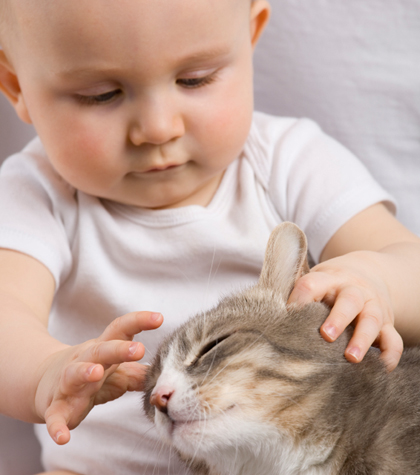
Guest Post: Newborn Babies and Cats Can Live in Harmony


The old wives' tale that cats sometimes maliciously kill newborn babies by sucking out their breath has been around since at least 1607. How is it possible that more than 400 years later, some people still believe the story has merit? It's difficult to fathom, but many people still give up their cats when they find out they have a baby on the way.

This is not only unnecessary, it can cause grief, both for the cat, and the ones who love it. Before you give up your feline friend in favor of your baby, take a look at the myth, the things you really need to be concerned about, and how to keep harmony in your home with both a cat and a newborn baby.

Cats and babies can live in harmony
Photo credit: blisstree.com
The Myth

Think about it for a moment. How could a cat possibly suck the breath out of a baby's lungs? It's physically impossible as any reputable pediatrician or veterinarian will tell you. Not only that, the cat has no motivation to do such a thing, even if it could. While there is a possibility your cat may experience some jealousy when you bring your new baby home, he's unlikely to take it out on the baby in such a violent way.

The Real Risks


More than expressing feelings of jealousy, your cat may feel the need to defend its territory from this little interloper in the crib. The most likely way he's going to do this is by urinating in the crib. It's called "marking," and nearly all cats—both male and female—do it if they feel their turf is being encroached upon. A cat may also urinate someplace besides the litter box if they feel stressed, and bringing a new baby home can certainly be a source of stress for other members of the household, including your pets.

A greater risk is, in fact, suffocation, but it's not intentional. As a cat owner, you know your furry friend likes to cuddle up against you to sleep. Doing this provides both warmth and security. But a cat doesn't know that a baby is vulnerable, and can possibly snuggle up against the baby's face, impeding its breathing. A newborn that can't yet turn its head will have no way defense against a cuddling cat. Remember that this danger is just as prevalent with pillows, or too many blankets or stuffed animals in the crib.

The Better Solutions

You don't have to give your cat away. Behavior issues may occur from time to time. It's all part of owning a pet, and addressing those issues is part of being a responsible pet owner. For some people, the immediate response is to try to give the cat pet meds, like sedatives, to calm the cat and stop the marking behavior. This may be a viable treatment, but it's likely a last resort. Only your vet can determine whether your cat needs any medication. Before you go that route, try a few other solutions.
Properly introducing your cat to the baby is essential
Photo credit: essentialbaby.com.au

Introduce Your Cat to the Baby

When you first get home with the baby, take a few minutes to give your cat some uninterrupted one-on-one time. Play with her, pet her, give her a treat, cuddle her if she tolerates it. Let her know she's important to you.

Your cat will naturally be curious about the newcomer. While you're holding the baby, allow your cat to approach, sniff, and generally check things out. The more you try to keep them apart, the greater lengths your cat will go to in order to get a peek at the weird, noisy thing, including possibly jumping into the crib or onto the changing table, possibly startling or scratching the baby without meaning to. Let her see the baby, and get used to the new scent. Chances are, she'll become bored pretty quickly, and move on to other things.

As your baby grows, remember to keep the kitty safe, too. Babies will be just as curious as cats, and will want to grab and pull at their tails, ears, and fur, or poke their shiny eyes. This can provoke the cat to scratch or bite to defend itself. It's up to you to keep them both safe, and as he grows, teach your child to respect your pet.

Make time to play one-on-one with kitty
Photo credit: rextalkingdog.com
Keep The Cat Out of The Crib

You'll undoubtedly set the crib up well in advance of bringing the baby home. In the meantime, don't let the cat sleep in it. A crib can be a nice hiding place for kitty, but don't let him start thinking it's his territory or you run the risk of him coming in to mark it when he finds a baby in there.

To avoid any mishaps with the baby, like the cat lying too close to the baby's face, keep the nursery door closed when the baby is napping. If you're keeping the crib somewhere that can't be closed off, put up a crib tent to keep the cat from jumping into it.

Make Time For Kitty

A new baby will demand nearly all your attention. But try to make a few minutes every day for your cat. Most cats are very independent, but this doesn't mean they do well being completely ignored. They still need attention and care.

Try not to let your hectic baby-feeding schedule cause you to forget to fill up the cat's food and water dishes. Above all, make sure you're keeping the litter box clean. Letting it get out of hand because you're short on time is a sure way to cause the cat to start urinating in other places, like the sofa or your bed.

With a little planning, some education, and a lot of patience, you can bring your baby home to a loving family that includes your beloved cat.

Jackie is a writer for 1-800-PetMeds and loves to help and support the pet community. You can follow PetMeds on Twitter or connect with PetMeds on Facebook.

Monday, February 1, 2010

Camp Pawprint day camp sign-up open today

From the Dane County Humane Society:

Camp Pawprint is a series of week-long day camps held at Dane County Humane Society. Campers ages 7 to 15 enjoy animal-related lessons and activities while having fun with other animal lovers! Activities include humane education lessons, critter projects, group games, and daily presentations from local animal experts. All campers spend time interacting with our camp animals and getting hands-on experience providing daily care and socialization. Animals used in the camp program vary daily and are approved by our behavior department.


Each week of Camp Pawprint has a different age group and theme. Activities, lessons, and visitors vary for each theme, but every week includes animal care and interaction, arts and crafts, and Friday afternoon horseback riding.

Registration opens February 1, 2010. Spots are limited and fill quickly so don't forget to register early!


For more information on Camp Pawprint click here.

Looking for something to do over spring break? Check out Club Whiskers!

Wednesday, January 6, 2010

Registration open for Club Whiskers camp

From the Dane Co. Humane Society:

REGISTRATION NOW OPEN!

Club Whiskers is a one week spring break day camp! Campers enjoy a fun-filled, animal-filled, and laugh-filled camp! Activities could include an animal-trivia scavenger hunt, “adopting” and caring for a shelter animal for the week, and learning how to “speak” to different types of animals without using your voice. All campers also spend time interacting with our camp animals, learn about their care, and get hands-on experience providing their daily care and socialization. Animals used in the camp program vary daily and are approved by our behavior department.

Sessions
Camp meets 9am-3pm Monday through Friday each week.
March 29 - April 2 (Ages 7-11)
April 5 - April 9 (Ages 7-11)

Fees
$165 - DCHS Members (If you are a current member of DCHS)
$200 - Become a Member (Includes the cost of one $35 year membership, and the discounted member price of camp)
$225 - Non-member (If you are not currently a member, or choose not to become a member)

Registration
Registration for Club Whiskers 2010 began December 1, 2009. Spots are very limited, so register early!
Click here to register.

Questions?
For more information, contact the Shelter Educator at esteinwehe@giveshelter.org.

Friday, November 20, 2009

Pins for Pets- fun bowling fundraiser for DCHS on December 6!

Do your kids love to bowl? Does your family want a fun way to support the Dane County Humane Society? Then sign your children up (age 7 and older) for the Pins for Pets fundraiser being held at multiple Badgerland Bowling Centers throughout Dane County on December 6! Just collect a minimum of $50.00 in sponsorships from friends and family and receive:


-a T-shirt
-3 games of bowling
-Pizza and beverages
-a chance to win great prizes!

Those with the three highest sponsorships at each location and the top bowlers in each age group will win prizes! The kid who raises the most overall money in sponsorships will win a Nintendo Wii. All proceeds go directly to helping the many homeless animals at Dane County Humane Society. The event will take place from 12:00pm-3:00pm.

Registration is due Monday, November 23, 2009  Tuesday, December 1, 2009 so make sure you sign up ASAP! To register contact Cory Neeley at 608) 838-0413 ext. 118 or cneeley@giveshelter.org .

Click here for more information, to download a pledge sheet, and for participating bowling centers.

Wednesday, October 21, 2009

Attention Kids: 2nd Annual APPA National Children’s Pet Poetry Contest!

For the second year, The American Pet Products Association (APPA) is holding a pet poetry contest for gradeschool children grades 3-5. Participants are invited to write a poem about their favorite pet and why they love them. Entries can be submitted online or by mail to Pets Add Life, 45 Winter Street, Reno, NV 89503. All entries must be received by January 15, 2010.

Two winners from each grade level will be selected to receive a supply of pet products. Their classroom will also receive a $1000 scholarship to help further pet-related education.

The clock is ticking, so kids....happy writing! Check out the website for all the contest details.

Wednesday, September 16, 2009

November date added for Baby-Ready Pets Class at DCHS in Madison


Due to the overwhelming success of the first few Baby-Ready Pets Classes held by the Dane County Humane Society, another date has been scheduled for November 19, 2009. If you missed out on the other dates or are just learning about this awesome program, now you have another chance to sign up!

Held at the Goodman Community Center in Madison on November 19 from 7:00 PM to 8:30 PM, participants in the Baby-Ready Pets Class will learn about issues faced when blending children and pets in the same household such as behavioral changes, proper introduction of pets to a new baby, and pet-related diseases.

For more info or to register: contact the DCHS Shelter Educator at esteinwehe@giveshelter.org or call (608) 838-0413 ext. 115. You may also visit the DCHS website for more information on this class and the shelter.